
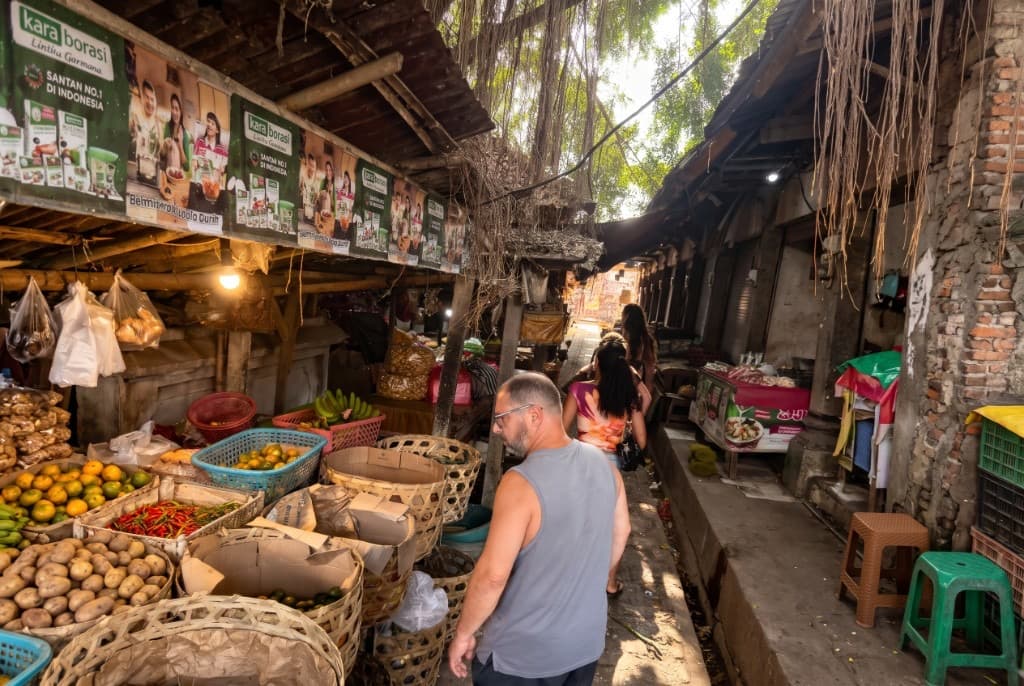
What do you actually see on the Ubud market visit? A working pasar: baskets of chili, citrus, banana, and potato, and a spice stall the host uses to explain Base Genep, the Balinese spice paste. You are not buying a souvenir bag as the product. You are learning the ingredients you will pound and cook an hour later at Tumang. The walk is part of the morning shared class at IDR 450,000 per person.
Key Takeaways
- A village pasar, not a staged supermarket aisle
- Chili, citrus, banana, ginger, and the spice mix for Base Genep
- You cook those flavors the same morning: sate lilit, sambal matah, lawar, pepes
- Included in IDR 450,000. Free Ubud pickup. Max 8
- Afternoon class does not include this walk
From the stall to the mortar
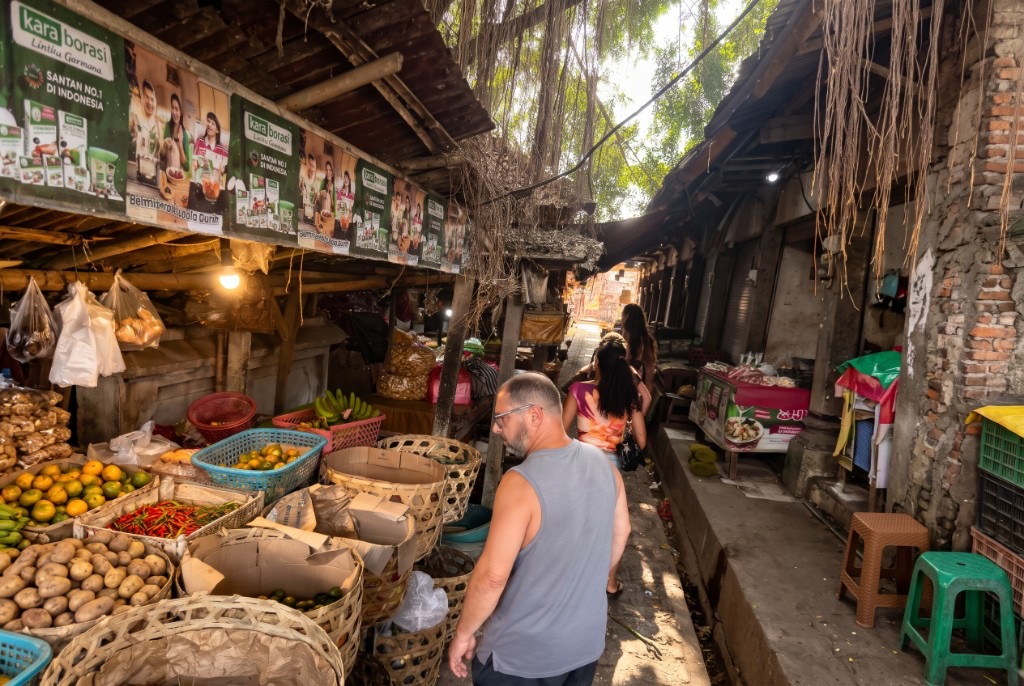
Base Genep is the paste behind most of the savory dishes. The market is where the host names the roots and leaves — galangal, turmeric, lemongrass, kaffir lime, bird’s eye chili — before anyone turns on a stove. In the kitchen you pound that paste by hand. The class does not hand you a blender and a printed recipe.
| In the pasar | On the plate later |
|---|---|
| Chili and shallot | Sambal matah |
| Spice roots and leaves | Base Genep |
| Protein and aromatics from the morning shop | Sate lilit, pepes, lawar |
The full list of dishes is still 10+, taught in English by Chef Wayan Suryana. Say vegetarian or vegan on WhatsApp and the menu changes. The spice walk does not. More on the paste: what Base Genep is. The three-stop morning: local market visit.
Book the morning if the pasar is the reason you want the class. Open the cooking page.